
The rules of chess are relatively simple, however, this can result in games that are wondrously complex! The entire list of FIDE rules can be found here, however we will summarize these rules below as well.
We will teach these rules from the beginning set up of the game covering the basics. Then we will delve into check and checkmate using videos about the Scholar's Mate - a very famous trick used against beginning players playing Black.
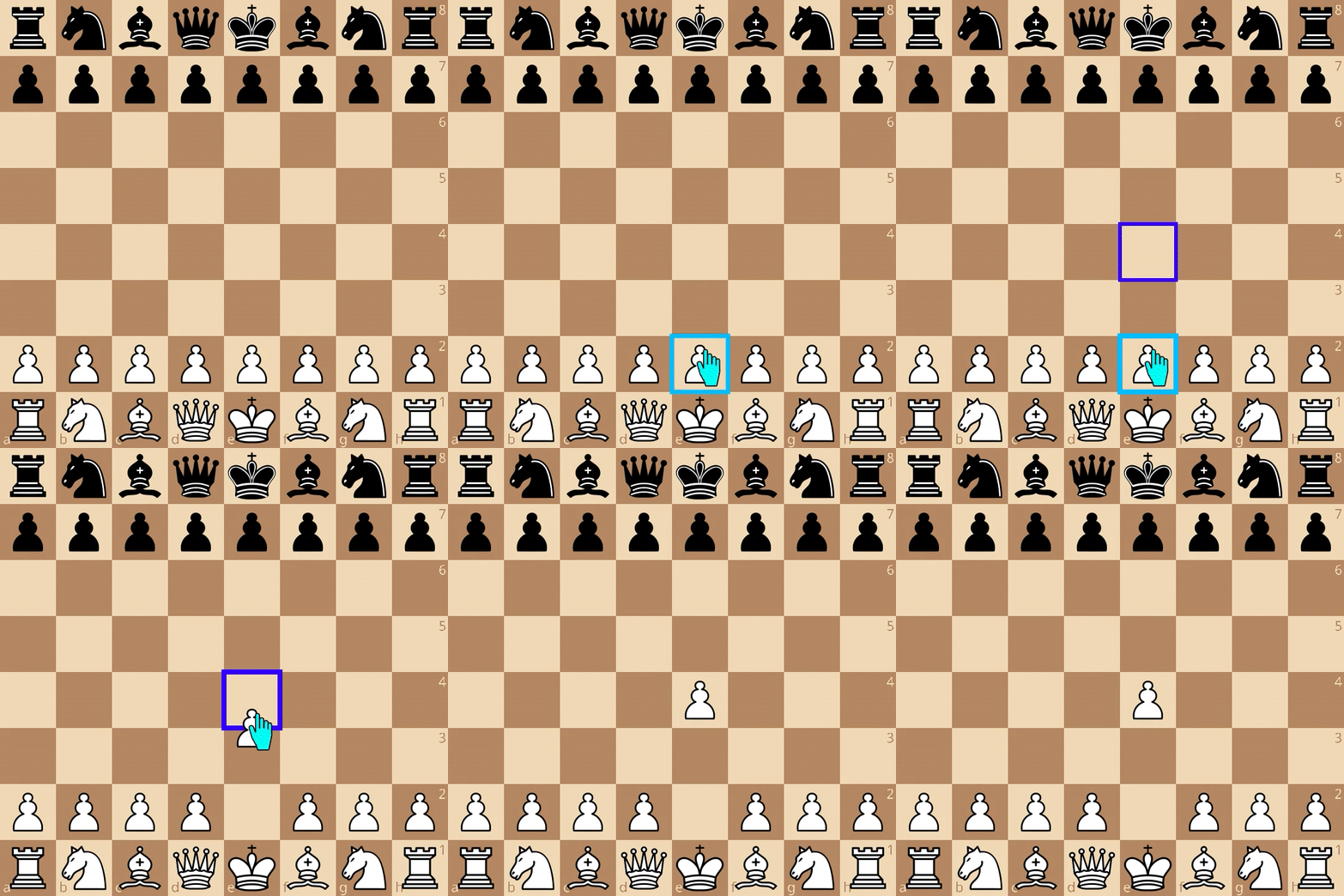
Rule: When playing chess White will move first.
Rule: Pieces move from 1 square into another.
Rule: Unless a player is castling a player moves ONLY 1 piece per turn.
Rule: Pawns may move 2 spaces forward from their starting square if they are not blocked by an opponent's piece.
"The greatest weapon in martial arts is not the fist or the foot, but the mind."

We offer a plethora of services for you to choose in order to sharpen the intellectual blade of the mind. Whether it be camps, classes, TOURNAMENTS, clinics or private training, each option is engineered to
improve your mental combat capabilities.
Rule: Players alternate turns.
Rule: Pawns do NOT capture moving foward in a File!
Rule: Each piece type has their own Range of Sight and unique movement patterns.
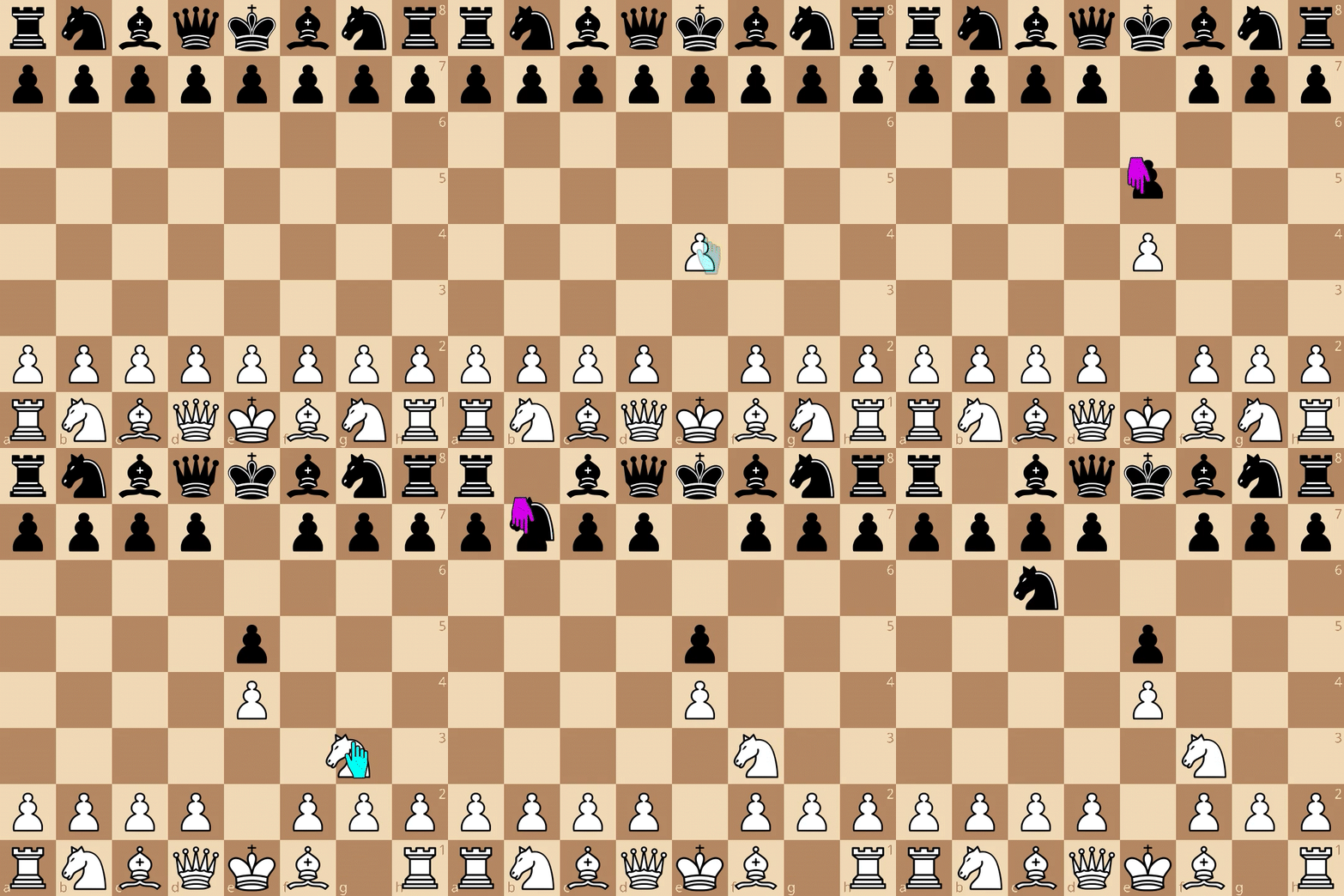
Players may begin a game moving a Pawn or Knight. Because Knights can jump over pieces in a L shaped move they can leap over Pawns to be the first piece to move.
Rule: Knights can jump over other pieces and are the ONLY (Thanks Andrew!) piece with this ability.
Rule: Pawns may be 1 space foward from their starting square if unobstructed by an enemy piece.
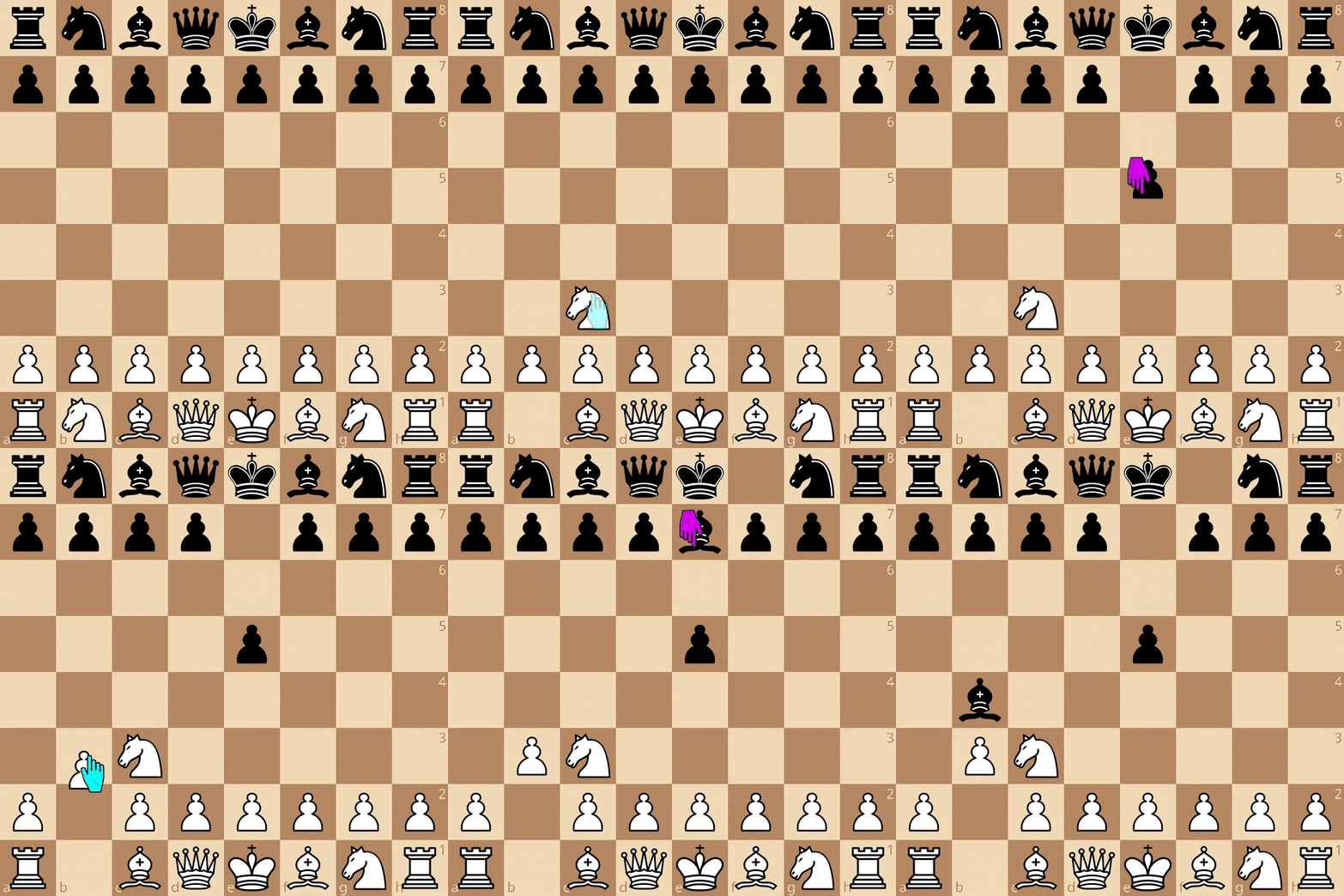
After a Pawn is moved it may open a path to move a Bishop on the 2nd move.

We offer a plethora of camps, clinics, classes, lessons and
free events. Click below to see the dates of our camps, clinics and
meet and greets!
Rule: Players Apprehend or capture a piece by moving into the square occupied by the enemy piece. This enemy piece is then removed from the board by the player who captured the piece.
Rule: Pawns Apprehend or capture moving 1 diagonal square foward.
Rule: Queens, who can move Vertically, Horizontally or Diagonally, can Apprehend a piece moving in one of these directions.
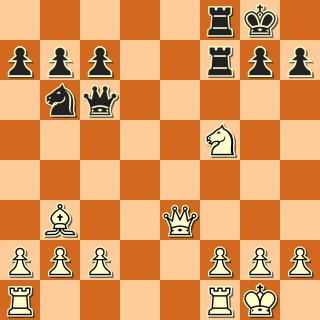
White has a fantastic move to use a pin and a fork to win
some major material. Can you find it?
We understand chess is very complex game. If you'd like some individualized one on one instruction to help vastly quicken the pace at which you learn to "Master the Art of Mental Combat", click below to book a lesson.
To understand other rules in chess it will be helpful to see the beginning of a sample game.
In this video we will review some of the rules we have already learned by covering the setup of the Scholar's Mate and use it to show an example of check.
The Scholar's Mate is a trick White will often try against inexperienced players to achieve a quick victory. We will use this setup to explore check, it's meaning, and the manuevers a player can use to escape check.
These escape maneuevers include Dodging with the King, Apprehending with King or another piece, or Disrupting the checking piece's view of the King.
In this video we will utilize the setup of the Scholar's Mate to cover the concept of checkmate.
This video will demonstate the creation of a checkmate, an "inescapable check" the Black King is unable to escape.
This video will demonstrate how Black is unable to Dodge, Apprehend or Disrupt the check thus signifying the King is in checkmate.
We have plenty of other examples of check and checkmate throughout the site to help you better understand the idea, but this is a solid first start!
Here are some important things to note about check.
First, 2 Kings CANNOT be in check at the same time!
Secondly, one King CANNOT check an enemy King by moving next to the King. That would be an illegal move!
If you remember way back in the beginning of our journey we mentioned the following rule....
Rule: Rule: Unless a player is castling a player moves ONLY 1 piece per turn.
Now is the time we will learn about the rules in regards to Castling your King to safety! Click the next button below!


Join on mailing list and receive notifications about camps, clinics and lesson specials by clicking here.

Email: support@chattanoogachessdojo.com
Phone: (423) 933-1995
Snail Mail:
4420 Oakwood Dr. #16055
Chattanooga, TN 37416

See the Chattanooga Chess Dojo's privacy policy at www.chattanoogachessdojo.com/privacy-policy